Wednesday, 24 April 2019

Eco-Friendly Commercial Automation


No matter what kind of business one may run, you might find yourself wasting more energy as each month goes by. But how can one reduce their carbon footprint while trying to keep up with the daily needs of the business? You could own a restaurant or a small business or a large corporate office – but either way, a smart and innovative commercial automation system can significantly impact your energy usage for the better. Anusha Technovision Pvt. Ltd. (ATPL) can provide the space with the smart features necessary to lower your bills and make your business eco-friendly. Keep reading below to learn more about the commercial automation technologies that can make your commercial setup automated!

In US, as per data on the US government website, 38% of the Total energy consumed in a Corporate Building is on account of Lighting. A reduction is the lighting usage can significantly reduce the total energy consumption. That is where Lightingcontrol strategies involving  High End Trim, Day Lighting, Vacancy Sensing, Time Scheduling, Motorised Shades among others would help significantly in Energy Saving.

High End Trim: With the help of dimming we start off with Maximum out put of Lighting Fixtures clipped to 80%. The logic being that Human eye cannot easily differentiate between 10-20% reductions in light from a maximum of 100%.


Day Lighting
: The use of Day Light sensors to measure the sunlight available and correspondingly reducing the output of Light Fixtures helps save energy.

Vacancy Sensing: Entering into a conference room and manually turning lights on, but having the facility where in – on exit the vacancy sensor automatically turns lights or even air conditioning off can significantly reduce energy costs and is a commonly used method today for energy saving.

Time Scheduling: Using a Time clock to reduce the over all lighting after normal office hours in public areas is one method of energy saving. The areas could also be places like Parking Lots where the maximum traffic is known to happen at certain times in the day and lighting can be adjusted according to the same.

Motorised shades: Automated shades are the perfect solution to cut down on the number of lights needed. With just a push of a button, you can lower or raise the shades at your command. Any of the employees or workers can operate the tech themselves – before a presentation, a meeting, or if a customer asks to have the natural sunlight come through.But when the sun is at its perfect spot, the shades can let the light in for everyone to enjoy its warm glow. When the shades are up – the lights can dim or turn off completely, effectively eliminating this waste of energy.

IN many places with intelligent software the shades can be made to raise or lower depending upon the path of the sun, automatically. Thus glare can be avoided when sunlight is direct and obstructing the ease of work on a desktop by bring shades down , where as in the same space depending on sun path when natural light is not the cause of glare, shades can be taken up to bring lighting and view for the space user.

Motorized windows are not just great for balancing a room’s lighting but they also provide the ultimate insulation for your business. Shades are able to create insulation, by relying on how they are installed.With a “gap” in between the shade and wall, there is an ideal amount of space created that acts as insulation for the building.In the summer, the HVAC will not have to work overtime to cool down the company space, and in winter, the heating bills won’t be nearly as high. Smart shades can keep one warmer or colder when needed, without even lifting a finger.

Measurement:

All Above strategies can save energy. However in order to measure the actual saving it is important that a big commercial building also invests in a proper Lighting Management System (LMS) that comprises of hard ware and software to measure, control and suggest energy saving methods based upon actual data and usage in the space.


                                                                                   - Alok Hada, Anusha Technovision Pvt. Ltd. 

Friday, 15 March 2019

Eco-Friendly Home Automation

We can’t turn on the television, browse the internet or read a newspaper without seeing a reference to ‘Go Green,’ but sometimes it’s difficult to understand what we are being asked to do. Going green can refer to many different things, but it generally refers to the little things that we choose to do to become more environmentally-friendly.

With all the tasks that one has to do, many wonder why we should make the extra effort to go green- For some, their decision is based on strong personal values,and while others are motivated because of the money they can save. Even though the most obvious reason for going green is to conserve resources for future generations, starting to implement green habits provides benefits we can immediately enjoy, like lowering the month’s energy bill.

Going Green at Home
Going green within our home is a great place to start, and it has the added benefit of lowering our energy costs. Everyone has had months when they dread opening their utility bills. How great would it be to know you are helping the environment, while also paying considerably less in energy costs?

Using Home Automation to Go Green
Since a large part of going green focuses on energy conservation, home automation systems can facilitate efforts of going green within our homes. There are many resources available to help organize your efforts of saving money and making you home a little greener. A home automation system can improve all areas of home energy usage:

  1. Air Conditioning and Heating System: With a smart thermostat, you can save money and energy by programming your thermostat to go easy on your home’s heating and air system when you’re not home and remotely change the temperature from any smart phone or other web-enabled device. Adjusting your thermostat just one degree you can save 5% on your energy bill.
  2. Lighting: Replacing your light bulbs with energy efficient light bulbs is an easy way to go green. When combining this with dimming, you can save as much as 25% of your lighting bills with bulbs last ten times longer than a standard bulb. A home automation system can be used to implement timers and regulate light usage within your home, and you can also turn off/dim lights remotely.
  3. Electronics: A homeautomation system can allow you to program your electronics to turn off when not in use. Also, being able to remotely control your home electronics and appliances such as televisions, desktop computers and curling irons allows you to ensure you are not wasting energy. 
  4. Motorised Shades- Shades not only reduce glare, protect your upholstery and fabric but also help reduce your air conditioning bills because of insulation. However, the common problem with manual shades is that unless really required, the chances of drawing the shades or parting them is not convenient. Enter motorised shades, lo & behold-touch of a button brings bright sunlight when required and another touch at a different time helps close the same shade. Motorised helps in conveniently using the shades to give user comfort and also at the same time indirectly saving considerable amount of energy


The more we learn about the importance of making green decisions, the easier it becomes to enable the small lifestyle changes that help sustain our environment. Starting with a home automation system can significantly assist in making green decisions easier. Not only does a home automation system lower monthly energy bills, it is also a small step towards the worldwide ‘go green’ initiative.

Saturday, 23 February 2019

New Trends in Home Automation


Toward the end of the year, the world wonders, “What’s next?”  The world of home automation is no different, and manufacturers have started to give us a clue about what might be coming to your home in 2024
At Anusha Technovision, we look forward to what’s on the horizon for 2024, especially in smart home automation, lighting, and voice control. We can’t wait to share these trends with you, and we hope you’ll call us to speed up your home to keep up with the dynamic year ahead.
Smart Mirrors:
The famous scene from the movie “Minority Report” where Tom Cruise’s character manipulates images on a screen with his hands is now one step closer to reality thanks to smart mirror technology. Mirrors can now display news and weather updates, show you your social media feeds, interact with other automation systems in your home and much more. Having that smart technology in your bathroom may be a little disconcerting for some, but the added convenience and sheer “wow” factor will likely persuade many people to bring these smart screens into their homes.
MORE ARTIFICIAL INTELLIGENCE CAPABILITIES
It may feel strange to admit, but we are firmly in the age of artificial intelligence. AI is poised to make a big impact on the world of home automation in 2024.
One major example of this trend is AI-enabled security devices. Security companies are in the process of rolling out smart door cameras with machine-learning technology. These devices will be able to identify specific faces, autonomously determine who’s at the door and then let them inside if they recognize a familiar person. There are also smart sensors with advanced AI systems that can detect fires and potential burglars as well as alert you if your carbon monoxide levels are too high
When your whole home automation runs as scheduled, it feels as though your entire house falls at your feet and facilitates your most carefree lifestyle. If that didn’t feel seamless enough, we have heard that even accessing the technology will get progressively easier.
·       More Scheduling: How? All signs point to further automation via programming on devices — no touch necessary. If you want your lights to turn on and off at a set time each day, that is a time-event. A non-scheduled event would be lights that come on when the door to the room is opened and go off when it closes
·       5G Creeping In: 2024 might not unveil a fully capable 5G, which will nearly eliminate our reliance on Wi-Fi. But 5G, projected to emerge in the next couple years, will usher in robust, high-speed connectivity, which will enhance every area of home automation.
·       Demand for Design: We’ve also found that new tech shifts toward a more diligent focus on design, adding more hidden speakers, architectural details, smaller (or hidden) devices and fewer cords. The smart home integrators at Elevated Integration care about how design and tech integrate, an area in which we’re proud to be ahead of the curve. 


Saturday, 24 November 2018

User Interface

User Interface in the present world refers to the visual interface of any technology, application or service that is being accessed, interacted with and used by the end users. At Anusha Technovision Pvt. Ltd., we provide our clients with optimally designed user interfaces for services, both for hard products and applications running on smart devices.

Examples of User Interface

1. Keypads- To complement and help enhance the beauty of interiors, we provide wide range of keypads in a variety of colours, finishes, style and function. The keypad is easy to use, readable, with custom engraved buttons in both wired and wireless options. We can set any mood lighting, control of shades/ HVAC on the keypads. 


2. Touch Screen- The in-house GUI (Graphic User Interface) software is developed in a way that it will be easy to understand icons, that allows end user to control and monitor lights, shades, audio video, security through a touch panel anywhere and anytime. We develop own own GUI and it can be customized according to the requirement of the customers. The various touch screen panels are available in multiple sizes. 


3. Voice Command- Now you can control the entire home with your 
voice. Amazone Alexa or Google home provide the device but we are here to integrate the lighting controls, shades, audio video, security, HVAC system with voice commands. We configure each command according to user’s specific words and choices. 

We at ATPL provide customized keypads that complement the existing interior design of the space, keeping in sync with the existing tone, our panels contrast the colours and finishes of the wall. It provides easy to use, readable buttons and comes in both wired and wireless versions. Lighting moods, controlling of shades/HVAC and multiple other functions can be done using these keypads. The touch screen interface is designed by an in-house UI design team ensuring easy understandable icons with distinct buttons that allow users to control and monitor lights, play audios and videos, and control our phones through the same. The user interface can be customized according to the user, and the touch panels are available in multiple sizes. An interesting inclusion is the addition of voice controls to the panels. Intelligently integrating services with devices like Amazon Alexa or Google Echo, our panels integrate lighting controls, audio and video playback, air conditioning and security features by bringing into one roof all appliances in the house. Commands and order words are customized according to the client’s demands.
Each component in this system viz. the keyboard, touchpad, and voice commands hold their own importance. While keypads enhance the aesthetic appeal of the wall, users also might choose to simply use their personal phones to control the settings. The inclusion of voice control facilities in the system help users to work with both their hands while controlling the various parameters of your home. Integrated with devices like Alexa and Echo, this brings in the next generation implementations in home automation.


Monday, 29 October 2018

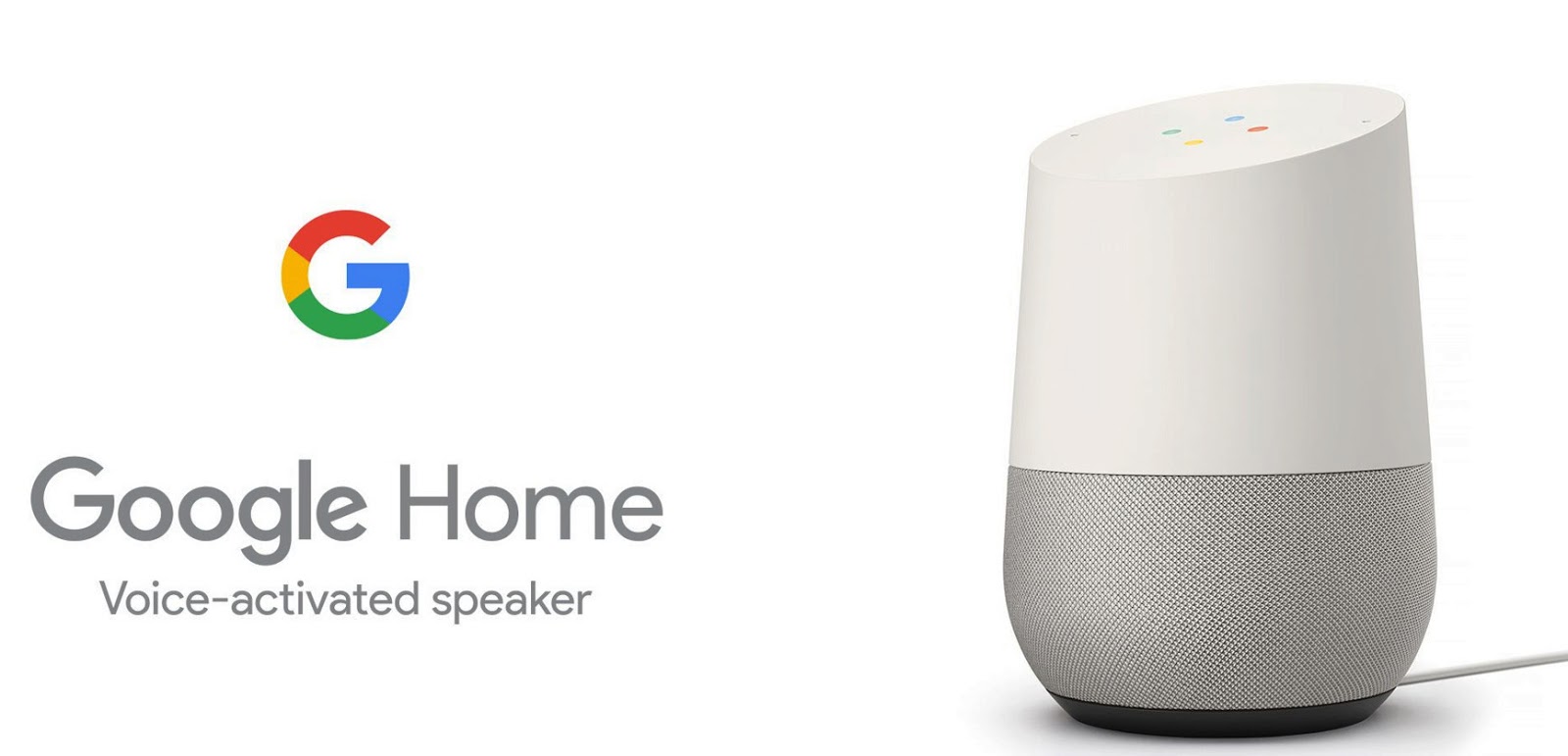
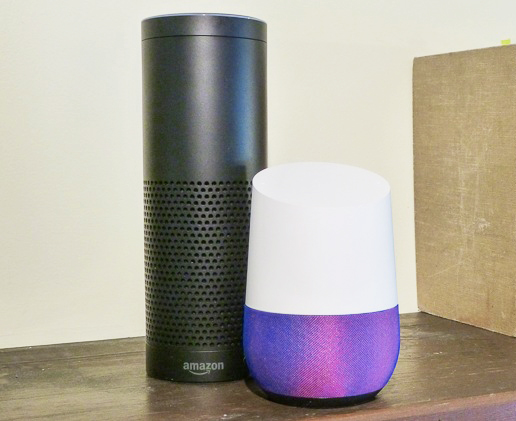
Voice commands (Alexa and Google Home) for Home automation


We at Anusha Technovision (ATPL) are updated with the latest technologies to provide the customers with the best and latest solutions. Currently, home automation based on voice control is what is trending these days and within this context- we introduce you to Alexa and Google Home (GH). 

Yes, Alexa from Amazon and GH from Google, help to provide the home owner, the next level of automation by providing voice controls to an automated home. Voice Control is meaningful for smart-home users, because it lets one control all the connected devices, without having to take out the phone and launch an app. 
Alexa can respond to voice commands from almost anywhere within hearing distances; and the good thing is that unlike like the smart phone, there’s no activation button to press. Simply say the right word (either “Alexa,” “Hey Google”) followed by what you want to happen, and the task will be done—as long as it been set up properly and you are using the correct command. It lets you speak your choice of words and see them being fulfilled such as dimming your lights or playing music tracks and much more.

So who can do all this setup for you?

It's us!  AnushaTechnovision(ATPL) can configure your Alexa/GH with an existing home automation system. And once done, you can call for different lighting moods, play a specific channel on your TV, control your shades, turn on/off your HVAC; in simple words, control each and everything under the system with just a mere voice command, making life simpler than ever—all while your phone stays in the pocket.


We can configure each and every command as per your choice of specific words. Once you get used to the command/quirks, using ALEXA/GH feels much more natural and responsive as compared to a phone-based voice assistant like Apple’s Siri. As a result, you are likely to find yourself using your phone less frequently when you’re at home.  If you thought the transition from flipping light switches to pressing smartphone buttons was game-changing, then having Voice commands control your tasks will be even more satisfying in a true-geek way. And after usage over a couple of months, if you need any tweaks, we even provide a complimentary visit for a final setup of all your ALEXA/GH commands. 

Next step in voice commands?
     Recognizing the voice command of the person and acting accordingly. Some baby steps have been made by Google and Amazon so that a Home owner may not want his hired help to be able to do the same thing that his own voice does.Completing multiple actions with one voice command such as “dim  lights, play music and also turn the bath on”,  at the same time, is not possible, at least yet.


However, we firmly believe that Alexa/GH isn’t a comprehensive smart-home system. It won’t replace a well-programmed graphic user interface on your IPad or iPhone, and at least as of now, it won’t allow for complex integrations of multiple devices (“turn the lights green when rock music plays in the kitchen” is not a valid command), and it won’t always be the most practical means of interacting with your other devices. Rather, we should think of it as an interface for your smart home, that provides additional means of control and functionality that an app on your phone can’t. This makes it an easier product to rely upon!

-Alok Hada, Director, Anusha Technovision Pvt. Ltd

Friday, 17 August 2018

Switches

All modern comforts today in a home, that can be related to technology - from lighting, fans, A/c, entertainment to kitchen appliances, have one thing common - the little button that transforms the sleeping tech gadget into a source of enjoyment, comfort or simply getting the work done. Every one of these gadgets has to be turned ON, and therein lies this seemingly common, but very important aspect – A Switch.

Lighting today does not simply have to be on/off, it can be modified to get the perfect level with the help of dimmers. Matching with the technology of the audio systems, the smart switches also give us complete control, to set the light according to mood. 


One of the major reasons of switches giving way to automation keypad is the user friendliness- a keypad is annotated properly, and each button is engraved and designed to remove any confusion about its functionality.

As design and technology are linked closely, the design of the switches has also undergone evolution. The switch stands out on a plain wall, and therefore designers tried to conceal them. Switches have become flatter, crisper, smarter, better-looking and now offer a variety of colors and materials to choose from.


A technology taking the center stage these days is the Palladium keypad by Lutron, a sleek 3x3 inch keypad, with 8 buttons that replaces a complete bank of switches. It is centrally linked to the automation system; as a result, lighting scenes, music or motorizedcurtains shades- everything can be controlled by just one keypad. Each button individually is backlit and custom engraved making it easy for the user to read, under all lighting conditions.


In the near future, I foresee that standalone switches will become obsolete. As home automation systems advance, gadgets will increasingly work as part of a larger ecosystem to provide a one-stop solution for all user needs.


Friday, 27 July 2018

Hi-Tech Security


The current image of discrepancy between the quality of modern day luxuries and amenities, between the two ends of economic spectrum is disappointing. This is perhaps, one of the strongest social contributors to the increase in crime rate across Indian cities. Most people involved in crimes, are from an economically unstable background. Social media posts revealing family details enhance the scope of public information, while unchanged passwords on house locks allow easy access to previously hired helps. These draw attention and opportunity for theft.

Surveillance systems have been around for some time. What is now common is the ability to view the camera output on the go, on most smart phones. Technology now allows us (with IP cameras) to have constant surveillance of our homes, irrespective of wherever we are in the world.

Video door phones (VDP) provided by many developers in apartments, are old features. What is new is IP video door phones- For many nuclear families where no one is at home when the hired help arrives to do work, a simple press of the bell on the IP VDP allows the homeowner sitting in office to see who is at the door, and also open the door to allow access.

In the case that a glass break sensor turns on alarm signaling intrusion, the security system which is linked to the lighting control system, could start flashing the whole house lights on, thus scaring away a potential burglar. Simultaneously when the alarm turns on a signal to the home owner who is away – in the form of a message or email signals potential trouble at home.

What is also new, is the addition of intelligence to the security systems. For example- A Home owner who was planning to have biometric locks, for entry in the house wanted us to allow access to some house hold helps only at certain times of the day. A normal biometric lock once having read in someone’s thumb print, cannot restrict the access depending upon time of the day. However with a separate intelligent thumbprint reader (removed from the lock) each reading can be sent to a server, where conditional logic would then send the signal to lock and enable opening - depending upon the person and also the time of the day.


Hi tech security systems can take such observations into account to reduce the possibility of theft. By linking security systems in a home to other automation systems, the house can be made more secure.
Something that would soon be available in security systems is the ‘Facial recognition’ feature. Something that is not very far on the horizon of technology is the intelligence in access control systems to make  even thumb print control redundant and upgrade to facial recognition, wherein  locks read your face and provide entry to the owner inside the home.